Table of Contents
When learners talk about Simples Presente Em Inglês, they are usually referring to the simple present tense, the backbone of everyday English communication.
Understanding the Simple Present in English
The simple present is one of the first tenses English students encounter, and it describes actions that are habitual, general truths, or scheduled events.
Unlike the present continuous, which highlights actions happening right now, the simple present focuses on routines, facts, and permanent situations.
For anyone exploring Simples Presente Em Inglês, it is essential to recognize that this tense lives in the base form of the verb, often adding an -s or -es in the third person singular.
How to Form the Simple Present Correctly
To use the simple present, you usually keep the verb in its base form, such as walk, play, or think.
When the subject is I, you, we, or they, the verb stays unchanged, making these subjects very straightforward in the Simples Presente Em Inglês context.
However, when the subject is he, she, or it, English adds an -s or -es to the verb, so talk becomes talks and wash becomes washes.
Key Verb Patterns
- Base form for most subjects: I walk, you walk, they walk.
- Add -s or -es for third person singular: he walks, she washes, it watches.
- Irregular verbs remain in their base form, such as have, do, and go, even in the third person.
Common Uses of the Simple Present Tense
One of the most frequent uses of the simple present is to talk about habits and routines that happen regularly.
People also rely on this tense to express universal truths, scientific facts, and general statements that are always true.
When you are practicing Simples Presente Em Inglês, you will notice that schedules, timetables, and fixed future events are often announced using this tense, especially in train schedules or class plans.
Time Expressions That Signal the Simple Present
Certain adverbs and phrases strongly indicate that the simple present is the appropriate choice.
Words like always, usually, often, sometimes, and never are classic markers of habitual actions in the Simples Presente Em Inglês.
Expressions such as every day, every week, on Mondays, and in the morning help learners understand that the action is repeated over time.
Contrasting Simple Present with Other Tenses
It is important to distinguish the simple present from the present continuous, which uses be + verb-ing for actions happening at this moment.
While the present continuous might say She is reading a book now to emphasize the current moment, the simple present would say She reads books every night to stress a routine.
Learners exploring Simples Presente Em Inglês often benefit from comparing these two tenses to avoid mixing ongoing actions with general truths.
Related Videos
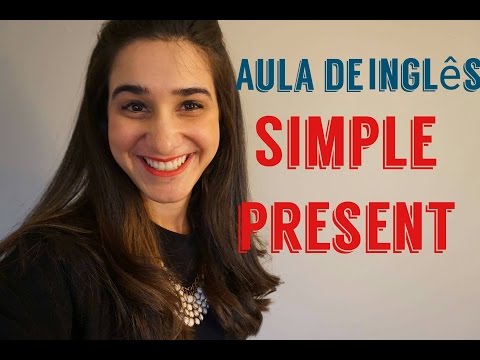
Aula de ingles - SIMPLE PRESENT
Aula do SIMPLE PRESENT completa! Espero que voces gostem, pois fiz com muito amor! Beijos! Meu ebook gratuito: ...
Practical Tips for Mastery
Listening to native speakers through podcasts, songs, and everyday conversations is one of the most effective ways to absorb the rhythm of the simple present.
Try to narrate your daily routine aloud, describing what you do each day using the Simples Presente Em Inglês to build confidence with the structure.
Pay attention to third person singular endings in movies and series, and notice how he, she, and it verbs gently change to convey habit and fact.
By understanding the forms, uses, and contrasts of the simple present, English learners can communicate daily routines, facts, and schedules with clarity and accuracy.
