Table of Contents
Understanding Presente Passado Futuro Ingles is essential for anyone who wants to express themselves clearly and confidently in English, since these three basic tenses shape how we describe what is, what was, and what will be. In everyday conversation and in more formal writing, the ability to move smoothly between present, past, and future time frames allows you to tell stories, explain ideas, and share experiences without confusion. This overview of Presente Passado Futuro Ingles focuses on the core concepts, common patterns, and practical tips that help you choose the right tense in real situations, so your English feels natural and accurate.
How the Present Tense Works in English
The present tense in Presente Passado Futuro Ingles describes actions happening now, general truths, habits, and states that are still true. Simple present is used for routines, such as I walk to work on Tuesdays, and for facts like The sun rises in the east. Present continuous, formed with am, is, or are plus a verb ending in -ing, highlights actions in progress at this moment, for example She is reading a report right now. Together, these structures give you a solid way to talk about the current time in your English communication.
When you use the present tense in Presente Passado Futuro Ingles, you can also refer to scheduled future events in areas like timetables, for instance The train leaves at six tomorrow, or to express a future intention in a more formal style, such as We meet the client next week. Native speakers often shift between simple present and present continuous to show subtle differences in how immediate or planned an action feels. Paying attention to these nuances helps you sound more natural and avoids the kind of confusion that arises when time expressions are not matched correctly with the verb form.
Describing the Past with Clarity
In Presente Passado Futuro Ingles, the past tense gives you the tools to talk about completed actions, earlier situations, and memories. Simple past is the go-to choice for finished events at a specific time, such as They visited Paris last summer, or for a series of past actions like I woke up, brushed my teeth, and caught the bus. Past continuous, using was or were plus -ing, sets the scene or describes an ongoing background action, for example It was raining while we were playing in the park. These forms work together to create a clear picture of what already happened.
Another important aspect of the past in Presente Passado Futuro Ingles is the use of past perfect to show that one action finished before another past action started, as in She had already eaten when I arrived. Modal verbs like could, should, and would also appear in past contexts to talk about ability, advice, or polite requests that were relevant at an earlier time. Learning how to combine these past structures smoothly will make your stories more coherent and help you avoid the common mistake of mixing time frames in a single sentence.
Talking About the Future in English
Discussing what lies ahead is a core part of Presente Passado Futuro Ingles, and English offers several ways to express future time. Will and shall are often used for spontaneous decisions, promises, or predictions, such as I will call you later or It will probably be sunny tomorrow. Going to is preferred when you have evidence or plans in mind, for example She is going to start a new course next month, because the intention is already formed. These simple choices help you signal whether your future reference is based on a plan, a prediction, or a quick decision.
In more formal or scheduled contexts, the present continuous can refer to arranged future events, as in We are traveling to Tokyo next week, and present simple is useful for timetabled events like The conference starts at nine. By practicing these different future forms within Presente Passado Futuro Ingles, you gain flexibility and precision, so you can speak naturally about tomorrow, next year, or any time you need to project yourself into the future.
Common Mistakes and How to Avoid Them
Learners often mix tenses in Presente Passado Futuro Ingles, especially when telling stories or describing changes over time. One typical error is using the present simple for an action that is clearly finished, or using the past continuous for a single completed action. Paying attention to time markers like yesterday, now, tomorrow, and for five years can guide you toward the correct tense and help you avoid confusing your listener.
Another frequent issue is overusing will when a planned future with going to would be more accurate, or relying too heavily on one structure and sounding robotic. To improve, try listening for how native speakers shift between tenses in conversations, videos, and articles, and notice how they match the tense to the time expression. Regular practice, with a focus on these details, turns the rules of Presente Passado Futuro Ingles into real speaking and writing habits rather than isolated facts.
Putting It All Together in Real Communication
Once you understand the basics of Presente Passado Futuro Ingles, the real challenge is using them together in a way that feels natural. In fluent English, you often describe a past event, refer to the present situation, and then project forward, all in the same conversation or text. For example, you might say, I was studying engineering in college, I work as a designer now, and I will probably manage a team in a few years. This kind of flow shows how the tenses connect and support each other.
To build this skill, practice narrating your day, talking about your goals, or summarizing a story while consciously shifting between present, past, and future forms. Over time, choosing the right tense becomes almost automatic, and your English will sound clearer, more confident, and more precise. By mastering Presente Passado Futuro Ingles, you give yourself a powerful framework for sharing experiences, explaining ideas, and connecting with people across different moments in time.
Related Videos
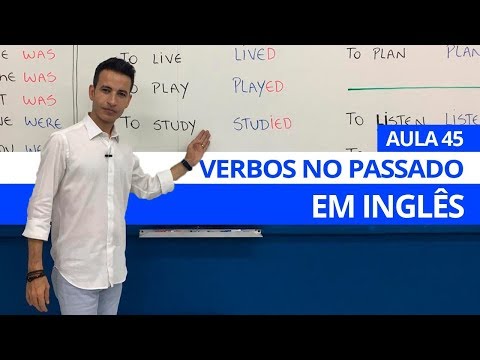
TUDO QUE VOCÊ PRECISA SABER SOBRE O PASSADO EM INGLÊS - AULA 45 PARA INICIANTES - PROFESSOR KENNY
Venha ser meu aluno! https://curt.link/yt-desconto-curso 0:00 HELLO, PEOPLE! 0:05 CURTA O VÍDEO! 0:15 SE INSCREVA!
Conclusion
Mastering Presente Passado Futuro Ingles is a rewarding step toward more fluent and accurate English, because it lets you handle any time frame with confidence. By reviewing how the present, past, and future tenses work, learning common patterns, and avoiding typical mistakes, you gradually improve your ability to express yourself in a wide range of situations. Consistent practice, attention to context, and a willingness to notice how these tenses appear in real language will turn what might feel complex at first into a natural part of your everyday communication.
