Table of Contents
Understanding Past Continuous With Past Simple helps you describe longer background actions and shorter interrupting events in natural, fluent English.
What the Past Continuous Describes
The Past Continuous focuses on an ongoing action at a specific moment in the past, highlighting duration, atmosphere, or background circumstances. You use it when you want to set the scene, almost like describing a photograph or a scene in a movie, so that listeners can picture the situation clearly. Common time markers such as at eight, at midnight, or while often appear with this tense to pin the action to a point in time. By pairing it effectively with the Past Simple, you can show at least two linked events, one stretching over time and the other punctual and precise.
For example, saying She was reading a book at 9 p.m. paints a picture of an activity already in progress around that hour, while She read a book last night would simply state a completed fact. The continuous form invites the listener to imagine the scene unfolding, which is why it often appears in storytelling, weather reports, or descriptions of how a situation developed. When you describe weather, emotions, or longer processes in the past, the Past Continuous naturally fits because it emphasizes the ongoing quality of those states.
The Role of the Past Simple in Narrative
The Past Simple is the workhorse for finished, completed actions, habits, or facts in the past, giving your sentences a crisp, decisive shape. It answers questions like what happened or when exactly did it happen, cutting straight to the result or the short event. In everyday conversation and writing, you rely on this tense to signal that an action has reached its endpoint and can be treated as a single point on the timeline.
Typical signal words that often point to the Past Simple include yesterday, in 1999, last week, and then, as well as many simple verbs without extra marking. When you combine it with the Past Continuous, you create a clear contrast: the continuous background and the simple foreground event. This contrast is extremely useful for showing cause and effect, for example, While I was waiting for the bus, it started to rain, where the waiting was the ongoing condition and the rain was the sudden, completed event that interrupted it.
How to Combine the Two Tenses
One of the most practical skills in English is learning how to braid Past Continuous and Past Simple together so that your stories flow smoothly. The general pattern is to use the continuous for the longer, slower-moving situation and the simple for the shorter, more striking action that cuts into it. This structure naturally highlights what changed or interrupted the scene you had been painting.
- Use while or when to link the two tenses, for example, While we were walking in the park, the phone rang.
- Keep the background action in the continuous and the interrupting action in the simple, such as He was cooking dinner when the doorbell rang.
- Remember that states and feelings, like know, believe, or love, are usually not used in continuous forms, so stick to the Past Simple for those even in the middle of a narrative.
By practicing these patterns, you train your mind to think in sequences, which makes your speech and writing feel more natural and fluent. Over time, choosing the right tense becomes almost automatic, and your storytelling gains clarity and precision.
Common Mistakes and How to Avoid Them
Learners often mix up these tenses by putting both actions into the Past Continuous, which can confuse the listener about what actually happened. For example, saying She was reading and called her friend sounds odd because calling is usually a short action better expressed in the Past Simple. Another frequent error is using the Past Simple for background situations that should be continuous, which makes your description feel too abrupt or fragmented.
To avoid these pitfalls, ask yourself whether the action was in progress over a period of time or if it was a single point event. If you are describing the weather, an emotion, or an ongoing activity, lean toward the continuous. If you are reporting a decision, a completed step, or a sudden event, choose the simple form. Listening carefully to native speakers and reading well-written stories can also help you internalize the subtle differences over time.
Practical Tips for Mastery
One of the best ways to improve is to narrate your day in two voices, first using mostly Past Continuous to set the scene and then switching to Past Simple for the key events. Try writing short paragraphs about ordinary moments, such as having breakfast or waiting at a train station, and consciously alternate between the two tenses. This exercise trains your ear to notice when a longer situation is unfolding and when a sharp interruption or result occurs.
Another useful tip is to collect example sentences you hear in films, podcasts, or books, and then rewrite them in your own words, keeping the same tense pattern. Pay attention to the signal words and the relationship between the actions, because these details guide your choice. With consistent practice, you will find it easier to express complex past situations with confidence, clarity, and natural rhythm.
Why This Matters for Real Communication
Mastering Past Continuous With Past Simple transforms the way you talk about the past, making your stories more vivid and easier to follow. Friends, colleagues, and listeners will understand not only what happened but also how events unfolded and influenced each other. This skill adds richness to your descriptions, whether you are recounting a minor incident or a major life turning point.
As you keep using these tenses together, your speaking and writing become more nuanced, helping you show cause and effect, contrast, and atmosphere with ease. The more you notice these patterns in real language, the more naturally you will reproduce them, leading to smoother, more engaging communication in both everyday conversations and formal situations.
Related Videos
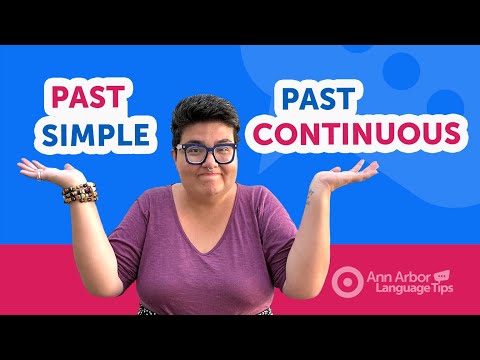
QUAL A DIFERENÇA ENTRE PAST SIMPLE x PAST CONTINUOUS
Descubra o curso EMPOWER YOUR GRAMMAR FOR FLUENCY! Junte-se a uma comunidade vibrante de alunos e comece ...
Conclusion
Past Continuous With Past Simple is a powerful combination that lets you describe background situations and interrupting events with clarity and precision. By practicing the patterns, avoiding common mistakes, and observing how native speakers use these tenses, you steadily improve your ability to tell past stories in a way that feels natural and engaging.
%22%3E%0A%3Cstop%20offset%3D%220%22%20stop-color%3D%22%2378350f%22%2F%3E%0A%3Cstop%20offset%3D%220.55%22%20stop-color%3D%22%23d97706%22%2F%3E%0A%3Cstop%20offset%3D%221%22%20stop-color%3D%22%23fcd34d%22%2F%3E%0A%3C%2FlinearGradient%3E%0A%3CradialGradient%20id%3D%22r%22%20cx%3D%220.5%22%20cy%3D%220.35%22%20r%3D%220.7%22%3E%0A%3Cstop%20offset%3D%220%22%20stop-color%3D%22%23fff%22%20stop-opacity%3D%220.18%22%2F%3E%0A%3Cstop%20offset%3D%221%22%20stop-color%3D%22%23fff%22%20stop-opacity%3D%220%22%2F%3E%0A%3C%2FradialGradient%3E%0A%3C%2Fdefs%3E%0A%3Crect%20width%3D%22400%22%20height%3D%22225%22%20fill%3D%22url(%23g)%22%2F%3E%0A%3Ccircle%20cx%3D%22126%22%20cy%3D%2294%22%20r%3D%2299%22%20fill%3D%22%23fcd34d%22%20fill-opacity%3D%220.25%22%2F%3E%0A%3Ccircle%20cx%3D%22282%22%20cy%3D%22152%22%20r%3D%2268%22%20fill%3D%22%2378350f%22%20fill-opacity%3D%220.35%22%2F%3E%0A%3Crect%20width%3D%22400%22%20height%3D%22225%22%20fill%3D%22url(%23r)%22%2F%3E%0A%3Ctext%20x%3D%22200%22%20y%3D%22155%22%20text-anchor%3D%22middle%22%20font-family%3D%22-apple-system%2CSegoe%20UI%2CRoboto%2Csans-serif%22%20font-size%3D%22170%22%20font-weight%3D%22800%22%20fill%3D%22%23fff%22%20fill-opacity%3D%220.12%22%3EV%3C%2Ftext%3E%0A%3C%2Fsvg%3E)
