Table of Contents
Few literary figures have traveled as far as Dom Quixote De La Mancha, the deluded yet endlessly endearing knight whose adventures continue to captivate readers centuries after his creation.
The Origins and World of Dom Quixote De La Mancha
Set in the rugged, windswept plains of La Mancha in central Spain, Dom Quixote De La Mancha emerges from a world of dusty inns, rustic inns, and forgotten chivalric ideals. The novel, published in two parts in 1605 and 1615 by Miguel de Cervantes, uses this setting to contrast the fading medieval fantasies with the emerging modern, pragmatic age. The protagonist, Alonso Quijano, reinvents himself as the noble and slightly absurd knight-errant, convinced that he must revive a bygone era of honor, justice, and heroic quests. This deliberate anachronism is the engine that drives the entire narrative, creating a timeless tension between dream and reality.
Understanding Dom Quixote De La Mancha requires appreciating the specific historical context of early seventeenth-century Spain. The country was in a period of political consolidation and economic decline, and the rigid social structures were beginning to show cracks. Cervantes, drawing on popular chapbooks and the conventions of chivalric romance, crafted a story that both celebrated the romanticism of those old tales and gently mocked their absurdity when applied to the contemporary world. The landscape itself becomes a character, vast and unforgiving, mirroring the internal landscape of its misguided hero and amplifying every misadventure along the road.
The Psychology of Idealism: Quixote’s Noble Madness
At the heart of Dom Quixote De La Mancha is a profound exploration of idealism and the human capacity for self-deception. Quixote’s delusion is not mere foolishness; it is a conscious choice to see the world through the lens of his cherished books, transforming windmills into giants and flocks of sheep into armies. This "noble madness," as it is often termed, represents a radical commitment to a personal code of honor, compassion, and justice, even when the world refuses to play along. His determination to right wrongs and protect the helpless, however misguided his methods, elevates him from a simple comic figure to a symbol of unwavering, if fantastical, principle.
The relationship between Quixote and his pragmatic squire, Sancho Panza, serves as the essential counterpoint to this idealism. Sancho embodies common sense, self-interest, and a grounded view of reality, often serving as the voice of reason that tries—and usually fails—to anchor his master. This dynamic duo creates a rich psychological study: the visionary and the realist, the dreamer and the pragmatist, locked in an inseparable partnership. Their conversations and debates form the philosophical core of the novel, probing questions about truth, perception, and the value of living by one’s ideals in a world that often rewards cynicism.
Key Themes and Enduring Relevance
Beyond its comedic surface, Dom Quixote De La Mancha tackles themes that remain strikingly relevant. The conflict between illusion and reality is the most obvious, as Quixote’s inability to distinguish between his chivalric fantasies and the mundane world drives the plot. Yet, Cervantes does not simply mock his protagonist; he often shows the tragic beauty of a man who chooses truth in the form of his delusions over a bleak, disillusioning reality. This exploration of subjective reality and the power of belief prefigures later literary and philosophical movements, making the novel a foundational text for modern introspection.
The novel also offers a sharp satire of social class and authority. Quixote’s skewed perception of nobility and chivalry leads him to challenge figures of genuine power, from innkeepers he elevates to the status of "lords" to wealthy merchants he deems worthy adversaries. In doing so, Cervantes critiques the rigid hierarchies of his society, revealing the absurdity of social pretense and the vulnerability of those who blindly accept official narratives. The enduring popularity of Dom Quixote De La Mancha lies in this multifaceted brilliance: it is simultaneously a hilarious adventure, a poignant character study, and a profound philosophical inquiry.
Symbolism and Iconic Imagery
The imagery surrounding Dom Quixote De La Mancha is among the most recognizable in all of literature. The emaciated horse Rocinante, the battered helmet, the makeshift armor, and the loyal yet bewildered squire are symbols that transcend the page. Rocinante, in particular, is a powerful symbol of faded glory and stubborn endurance, a noble beast reduced to skin and bones yet still carrying his master into impossible quests. These tangible symbols give concrete form to Quixote’s abstract ideals, making his internal struggle visible and deeply moving. The windmill scene, perhaps the most famous episode, transforms a common agricultural structure into a monumental test of courage and conviction, encapsulating the entire theme of noble folly.
Furthermore, the very name "Don Quixote" has become a universal shorthand for a well-meaning but impractical idealist. The phrase "tilting at windmills" originates directly from this novel, describing a futile struggle against imaginary enemies. This linguistic integration into countless languages is a testament to the character’s iconic status. The imagery of the knight-errant, however absurd, persists in modern culture, representing the perennial human desire to seek purpose and fight for a cause, no matter how quixotic that cause may appear to outsiders.
Legacy and Cultural Influence
The influence of Dom Quixote De La Mancha stretches far beyond the boundaries of Spanish literature, securing its place as a cornerstone of the Western canon. It has been translated into more languages than almost any other book, second only to the Bible and Shakespeare’s works in its global reach. Writers from Henry Fielding to Salman Rushdie have acknowledged its profound influence, and it is frequently cited as the first modern novel for its complex characterization, narrative structure, and self-awareness. The novel’s exploration of the porous boundary between fact and fiction continues to inspire meta-narrative techniques in contemporary storytelling.
Adaptations of the story are legion, ranging from stage plays and operas to films and television series, each interpreting the core themes for new audiences. These adaptations prove that the central conflict—a man pursuing a noble but impossible dream in a world that does not share his vision—is a timeless one. Dom Quixote De La Mancha remains a mirror held up to humanity, reflecting our own capacity for folly, our need for hope, and the bittersweet beauty found in striving for something greater, even when the windmills inevitably turn out to be just windmills.
Related Videos
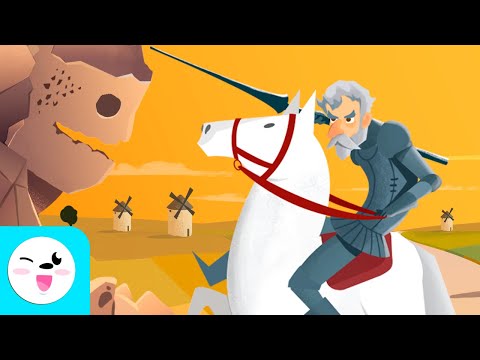
Dom Quixote de la Mancha para crianças - Contos Clássicos
Dom Quixote de la Mancha em versão infantil é um conto educativo para crianças, que conta as aventuras do Dom Quixote de la ...
Conclusion
Ultimately, the enduring power of Dom Quixote De La Mancha stems from its remarkable duality. It is a comedy that makes us laugh, a tragedy that often moves us to tears, and a philosophical adventure that challenges our deepest assumptions about reality and illusion. Cervantes created not just a character but a lens through which we can examine our own pursuits, our own noble foolishness, and the complex dance between the dreams we hold and the world as it is. In celebrating the quixotic spirit, the novel reminds us of the profound and necessary value of imagination, even—and perhaps especially—when it leads us to the windmills.
